

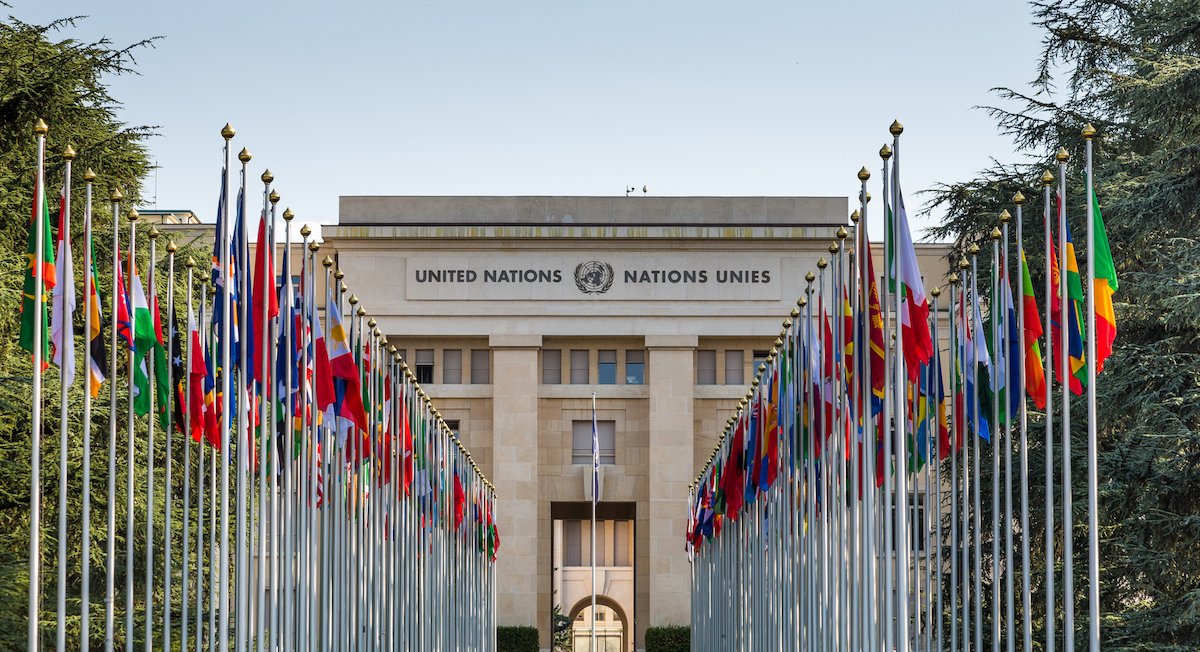
UNSC
The UNSC committee is one of the main United Nations boards responsible for maintaining international peace and security. The committee usually handles modern and sudden conflicts and crises between nations.
Committee size: 30 single delegations
Committee Topics
-
1. Blood Diamonds
The trade in blood diamonds emerged as a major international security and humanitarian issue during the late 20th century, particularly during the Sierra Leone Civil War from 1991 to 2002. During the war, rebel groups such as the Revolutionary United Front seized diamond mines and used forced labor to extract diamonds that were then sold on international markets to finance weapons and military operations. Weak governance, corruption, and widespread smuggling, often facilitated through neighboring states such as Liberia, allowed conflict diamonds to enter legitimate supply chains and fueled prolonged violence marked by mass killings, mutilation, sexual violence, and the widespread use of child soldiers. Although international intervention and the end of the war led to political stabilization and increased legitimate diamond revenues, illicit mining and smuggling persist. In response, the international community established the Kimberley Process Certification Scheme and passed national legislation in major consumer states to restrict the trade in conflict diamonds, but limited enforcement, weak monitoring, and narrow definitions of conflict diamonds continue to undermine these efforts.
-
2. Counteracting Terrorism in the Middle East
Modern terrorism in the Middle East developed primarily in the late 1970s and 1980s amid political upheaval, weak state institutions, and foreign intervention, with the Iranian Revolution and the Lebanese Civil War playing central roles in shaping militant ideologies and operational tactics. During this period, state-sponsored terrorism became increasingly prevalent as governments such as Iran and Libya provided funding, training, and logistical support to non-state militant groups including Hezbollah, enabling terrorist activity both within the region and internationally. Despite international sanctions, United Nations resolutions, and diplomatic isolation efforts, these measures often failed to dismantle terrorist financing networks or address the underlying political and institutional weaknesses that allow such groups to thrive. As terrorism originating in the Middle East has increasingly affected global security, the issue remains a pressing concern for the United Nations Security Council and requires coordinated international action rather than unilateral responses.
Committee Chairs
-

Parth Khandat
Parth Khandat, a senior at Maggie Walker, is excited to be one of your co-chairs in the UNSC. This will be his third year with GSMUN and his second year serving as a chair. In addition to GSMUN, he participates in the Chesterfield Youth Advisory Board and plays guitar at events and gigs. In his free time, he engages in chess, videogames, reading, volunteering, music, and working out. He is happy to serve as your chair and interested to hear how you go through committee.
-

Gavin Brunette
Gavin Brunette, a senior at Maggie Walker, is thrilled to serve as one of your co-chairs in the United Nations Security Council committee. This is his third year participating in GSMUN and his second year serving as a co-chair. In addition to GSMUN, he participates in Mock Trial and a variety of other clubs. Additionally, he enjoys reading, volunteering, and listening to music. He is very excited to be a part of your 2026 GSMUN experience.